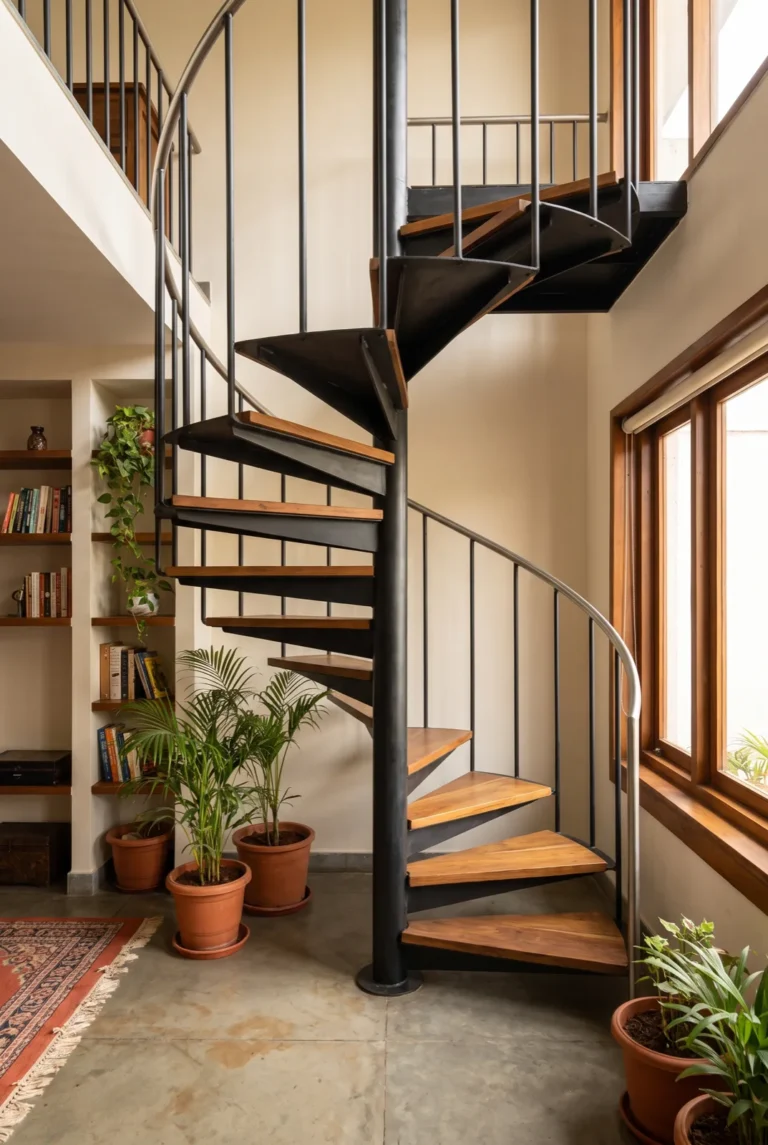
Light Rust at the Base of Balusters on a Black Metal Staircase
A common thing to notice on a new black metal staircase: a faint orange bloom at the bottom of each baluster, right where the rod enters the tread. It wipes off on a finger or a cloth. Everywhere else the staircase looks perfect.
That pattern is worth understanding, because the fact that it wipes away tells you what it is, and the fact that it is always at the same place tells you why.
Why it appears exactly there and nowhere else
Three things happen at the base of a baluster that do not happen along its length.
- Water arrives and stops. Anything that lands on a rod runs down it. At the tread it meets a horizontal surface and sits there instead of draining away. Mopping does the same thing as a spill.
- There is a hairline gap. Where a rod meets a tread there is a joint, and a joint that fine draws water in by capillary action and holds it. The surface can look dry while the gap is still wet.
- The coating is thinnest at that point. Paint and powder coat pull away from sharp edges and weld seams as they cure. The base of a rod has both, so it has the least protection on the whole staircase.
Add a monsoon, a coastal city or a freshly mopped floor, and the one spot with standing water and the thinnest coating is the one that blooms first. It is not a coincidence and it is not bad luck.
Surface rust or a real problem
The wipe test settles most of it.
Surface rust, and largely cosmetic
- It comes away on a dry cloth or a fingertip.
- The metal underneath is smooth when you run a nail across it.
- The colour is orange or light brown rather than dark.
- It reappears slowly after cleaning rather than within a day.
Worth acting on properly
- The surface is rough or pitted under the rust, so material has already been lost.
- The rust is dark brown or almost black, which means it has been developing for a while.
- The coating is lifting, bubbling or flaking around the spot, so water is now travelling under the paint.
- Rust is weeping out of the joint itself rather than sitting on the surface.
- It returns within days of every cleaning.
On a staircase in its first year, the first list is far more common. Flash rust on a new installation usually means a small area of thin coating met standing water, not that the steel is failing.
How to treat it
For light surface rust that wipes away, the fix is straightforward and worth doing once properly rather than wiping it every month forever.
- Dry the area completely and keep water off it for a day before starting.
- Clean the spot with a degreaser or mild detergent, then dry it again. Skipping this traps oil under the new coating.
- Abrade lightly with fine abrasive paper, around 320 grit, just enough to take the bloom back to sound metal. This is not a sanding job.
- Wipe away all dust with a cloth barely damp with a solvent, and let it flash off.
- Apply a rust converter or a metal primer suited to the coating already on the staircase.
- Touch in with a matching topcoat and let it cure fully before the area gets wet again.
- Seal the hairline gap where the rod meets the tread with a flexible sealant so water cannot sit in the joint. Skipping this step is why the rust comes back.
The last step matters more than any of the others. Recoat without closing the gap and you have treated the symptom and left the cause in place.
What not to do
- Do not paint over damp or rusty metal. It looks fixed for a season and then lifts in sheets.
- Do not attack it with steel wool, especially near stainless steel. Fragments left behind rust themselves and will stain the stainless.
- Do not use a household bleach or an acidic cleaner on coated steel. Both attack the coating you are trying to protect.
- Do not let a mop bucket stand at the base of a staircase, which is the most common cause of the whole problem.
Keeping it from coming back
Wipe up standing water at the base of balusters rather than letting it dry there, especially in the monsoon. Check the same points once a season, since they will always be the first place anything shows. Outdoor and terrace staircases need a protective coat renewed on a schedule rather than when rust appears.
Our spiral staircase maintenance guide sets out cleaning by material, and if the staircase also ticks or creaks with the weather, that is thermal movement rather than corrosion.
If the metal is pitted, the coating is lifting, or rust is weeping from the joint, send a photograph. We work on staircases we did not build, and it is worth knowing whether it is a touch-up or a refinish before it becomes the second one.
For mild steel railings and staircases finished to resist this in the first place, see MS railings and staircases.