

Aluminium Stairs and Railings
Where Aluminium Is the Right Choice, and Where It Is Not
Aluminium is the right material for a great deal of staircase and facade work, and the wrong one for some of it. Being clear about which is which usually saves money, because the alternative is finding out later.
We use aluminium for railings and balustrades, and for doors and windows, including CNC-machined sections. Staircase structures we build in steel. Here is where aluminium earns its place.
What Aluminium Is Genuinely Good At
- It does not rust. Aluminium forms its own oxide layer, so unlike steel it will not bleed orange streaks down a wall. On a terrace, a balcony or anywhere coastal, this is the whole argument.
- Anodising lasts. An anodised finish is grown into the surface rather than painted onto it, so it does not chip off an edge the way a coating can.
- It is light. Roughly a third the weight of steel for the same volume, which matters when components have to be carried up a stairwell or lifted onto a terrace.
- It takes complex profiles. Aluminium extrudes and machines cleanly, which is why it suits handrail sections, glazing frames and window systems with concealed drainage and multi-point locks.
- It needs very little upkeep. Occasional washing, no annual repainting.
Where Steel Is the Better Answer
Aluminium is roughly a third as stiff as steel. For the same load it either has to be thicker or span less, which changes how a staircase looks and what it costs.
- Structural stringers and centre columns. The parts carrying the load are usually better in mild or stainless steel, which is why most staircases described as aluminium are in fact a steel structure with aluminium railings and trim.
- Long unsupported spans. A cantilevered or floating flight relies on stiffness, and that is steel territory.
- Anywhere welding will be needed on site. Aluminium is far less forgiving to weld than steel, and a poor field weld in aluminium is a real weakness rather than a cosmetic one.
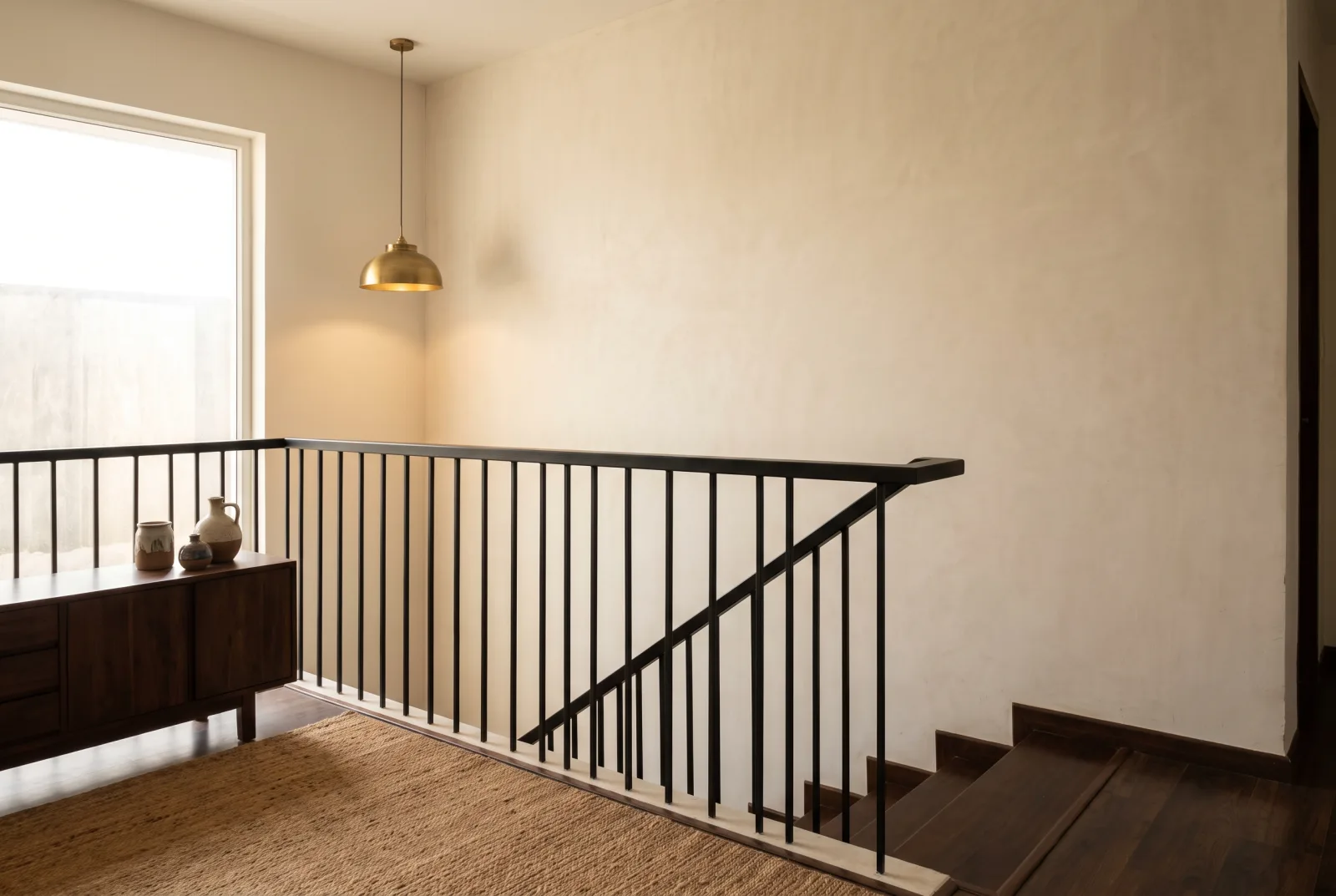
How the Two Are Usually Combined
The arrangement that works for most Indian homes is a steel structure carrying the load and aluminium doing the parts that face the weather and the hand.
- A galvanised or mild steel frame for the flight itself, coated for the conditions it will live in.
- Anodised aluminium for the railing, balusters and handrail, particularly on terraces and external stairs.
- Tempered or laminated glass infill where you want the view kept open.
- Aluminium doors and windows in matching finishes, so the metalwork across a facade reads as one thing.
This is also the cheaper answer, because it puts each material where it is doing what it is best at rather than paying for aluminium to do a job steel does better.
Stairs to a Terrace or Upper Floor
A large share of aluminium enquiries are for access to a terrace or a top floor, and that is a case with its own rules. The staircase is outside, so it takes sun, rain and salt air continuously, and it is often exposed on all sides.
For that we would normally propose a galvanised steel structure with anodised aluminium railings, since galvanising handles the structural corrosion problem and aluminium handles the part you touch. A staircase built in the workshop and delivered as components also suits terrace access well, because there is rarely a good way to run fabrication work on a roof.
Common Questions
Do you build staircases entirely from aluminium?
No. We fabricate staircases in mild steel and stainless steel. Our assemblies are welded, and steel gives a staircase the strength and stability aluminium cannot. Where aluminium belongs is the railing, and the doors and windows around it.
Is aluminium railing strong enough to be safe?
Yes, when sized correctly. Railings resist sideways loads rather than carrying the building, and aluminium is well suited to that. Handrail height stays between 34 and 38 inches and baluster gaps stay child-safe whatever the material.
Will anodised aluminium fade?
Far less than paint or powder coat. Anodising is part of the surface rather than a layer on top, so it does not peel. Colour can shift slightly over many years of direct sun, but it will not flake.
Can aluminium be matched to my windows?
Usually yes. We fabricate aluminium doors and windows as well as railings, so finishes can be specified to match across a facade rather than approximately.
What does aluminium work cost?
It depends on the length of railing, the section, the finish and whether glass is involved, so figures vary a good deal between projects. Send the measurements and we will price it properly rather than guess at a range.
Tell Us Where It Is Going
The useful details are the length of railing or the staircase dimensions, whether it is inside or exposed to weather, and how close you are to the coast. Send those to us and we will come back with a recommendation and a drawing.
See also our full range of services, custom staircase solutions, or send your measurements.
Aluminium asks for very little upkeep, but nothing is maintenance-free. Our staircase maintenance guide covers balustrade and handrail care, including anodised aluminium and stainless.