Spiral Staircases: How Much Space They Save and How to Size One
The usual reason for choosing a spiral staircase is floor space. A straight flight eats a corridor of your room; a spiral occupies a circle roughly the width of a doorway and a half. In an Indian apartment or a compact duplex that difference often decides whether an upper floor is usable at all.
What follows is the practical side of that decision: how much room a spiral genuinely needs, how to measure your space before you talk to anyone, which materials suit which settings, and the cases where a spiral is the wrong answer.
Why Choose a Spiral Staircase?
The advantage is real, but it is worth understanding rather than taking on trust, because it comes entirely from geometry.
How Much Room a Spiral Actually Needs
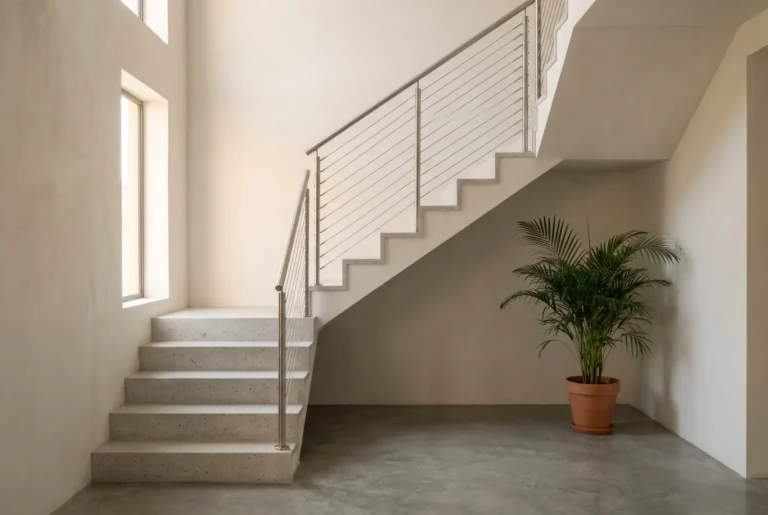
A straight flight has to lie down. For a typical floor-to-floor height of around three metres you need roughly sixteen to eighteen steps, and at a comfortable tread depth that is about four metres of floor length, plus somewhere to arrive at each end. That strip of floor is gone permanently.
A spiral climbs the same height inside a circle. Its footprint is simply its diameter, whatever the floor height, because adding height adds steps around the same column rather than along the floor. That is the whole argument, and it is why the saving is largest in tall rooms.
Choosing a diameter
Diameter is the decision that everything else follows from, and it is the one most often got wrong. A wider spiral gives a deeper tread where people actually walk, which is the outer third of each wedge-shaped step.
- Around 1.2 m — tight. Suits occasional access such as a terrace or a loft, not a staircase used many times a day.
- 1.4 m to 1.6 m — the usual domestic range. Comfortable for daily use in a home.
- 1.8 m and above — generous. Appropriate where the spiral is the main staircase, or where it is meant to be a feature.
Shrinking the diameter to save floor space is the most common false economy in a spiral staircase. It takes the depth out of exactly the part of the step people put their feet on, and produces a staircase the household quietly avoids using.
What to measure before you enquire
- Floor-to-floor height, from finished floor to finished floor. This sets the number of steps and the height of each one.
- The opening in the floor above. It has to clear the diameter with room to spare, and it is often the real constraint rather than the room itself.
- Where you want to arrive at the top, since that fixes which way the staircase turns.
- The route in. Components have to reach the spot, so door and passage widths matter.
With those four numbers a fabricator can tell you whether a spiral fits before anyone visits. Without them, nobody can.
When a spiral is the wrong choice
- Moving furniture between floors. A sofa does not go up a spiral. If there is no other route, this settles it on its own.
- Someone in the house with limited mobility. Continuous turning on a varying tread is harder work than a straight flight, on every trip.
- When the available diameter is simply too small for a comfortable walking line.
Spirals are at their best for terrace and mezzanine access, as a second staircase, and wherever a straight flight would consume a room. The safety side of the geometry is covered in more detail in is a spiral staircase safe for an Indian home.
- Floor space — the footprint is a circle rather than a strip of floor, and it does not grow as the ceiling gets higher.
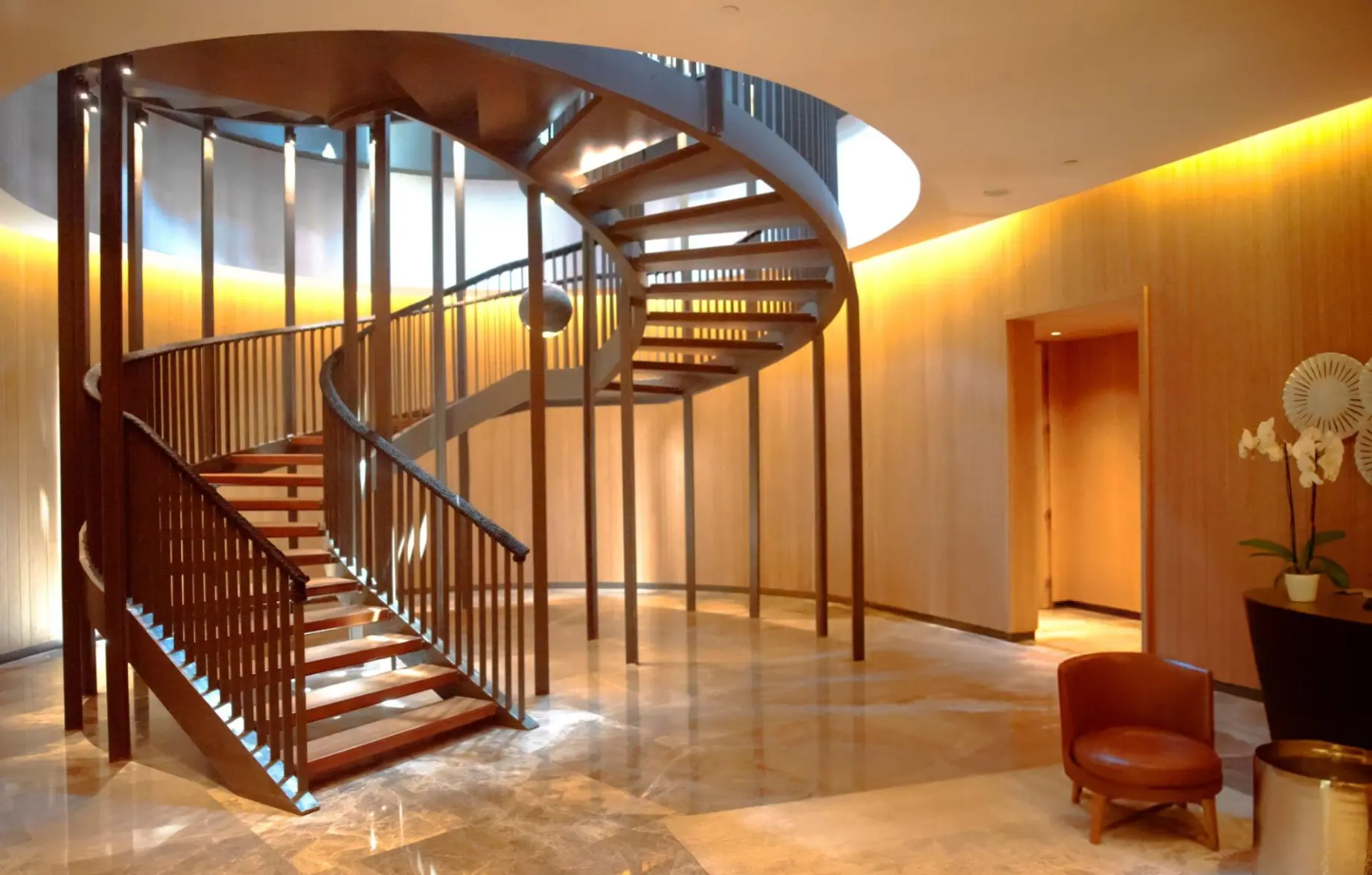
- A focal point — a spiral is the one staircase shape people notice, which is either the appeal or the drawback depending on the room.
- Adaptable — indoor or outdoor, home or commercial, with the material chosen for where it will live.
- Durable — stainless steel, mild steel, glass and hardwood all last decades when specified for the conditions and maintained.
Types of Spiral Staircases We Offer
We provide bespoke designs tailored to your needs:
1. Classic Metal Spiral Staircases
- Materials: Stainless steel, wrought iron, brass
- Finishes: Polished, matte, antique, powder-coated
- Best for: Luxury homes, heritage buildings
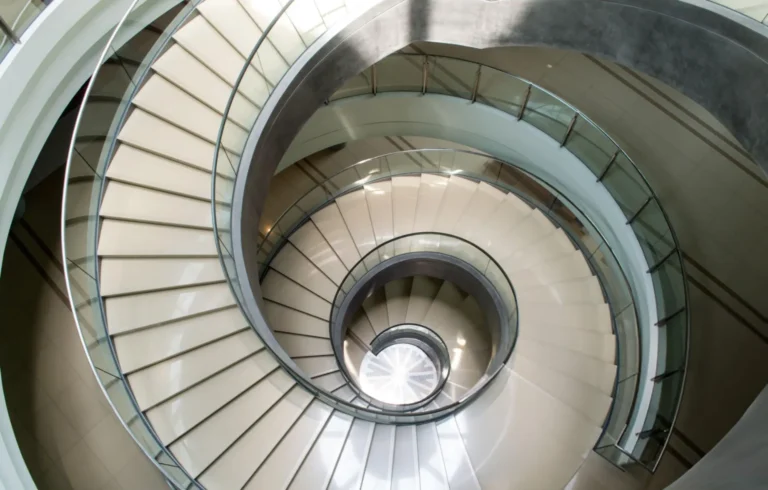
2. Modern Glass & Steel Staircases
- Sleek, transparent treads with stainless steel railings
- Perfect for: Contemporary offices, showrooms
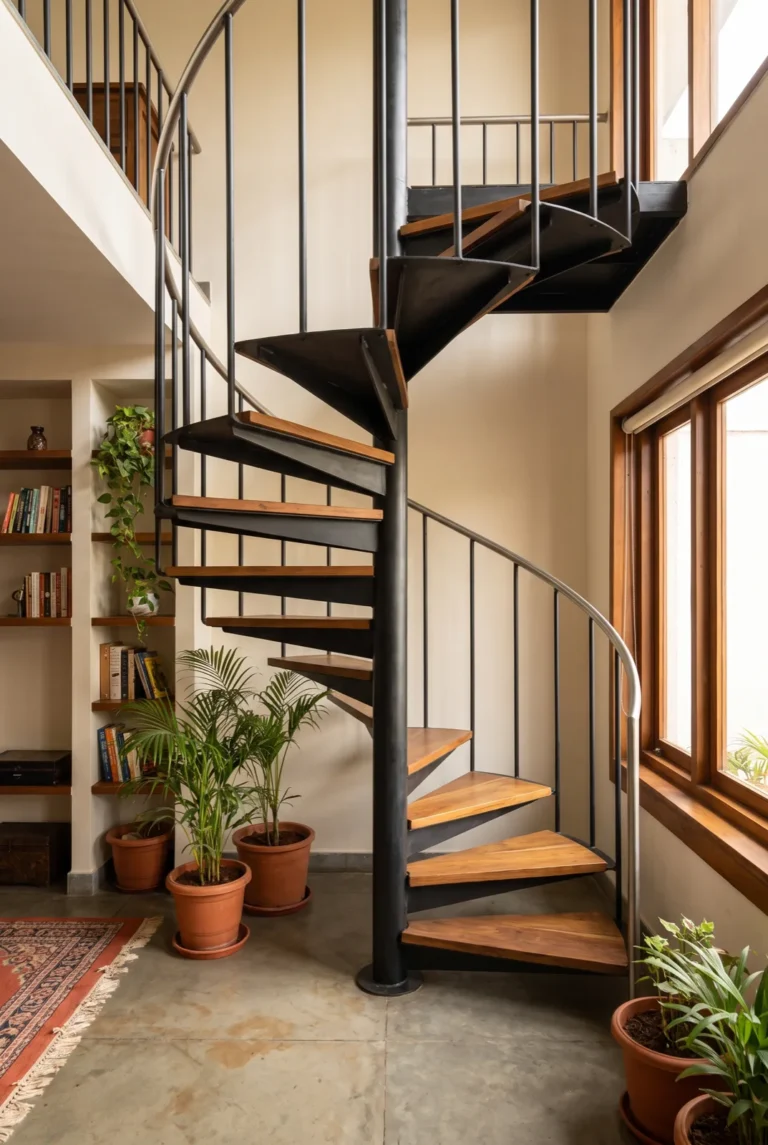
3. Wooden Spiral Staircases
- Warm, traditional look with teak or oak finishes
- Great for: Rustic homes, villas
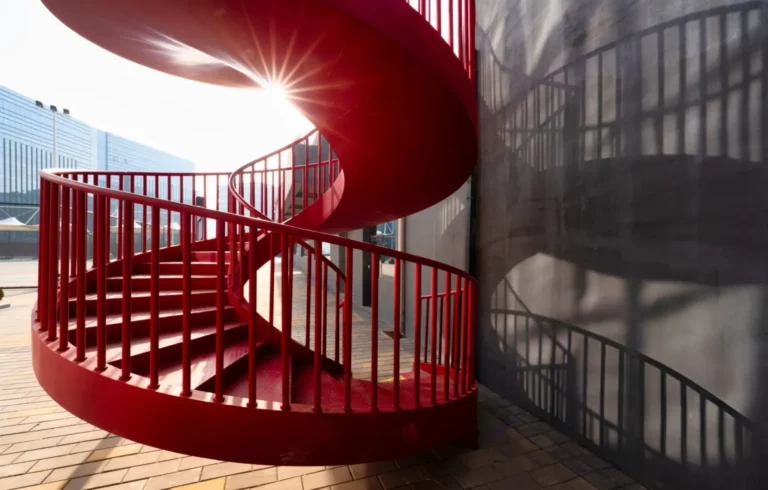
4. Outdoor Spiral Stairs
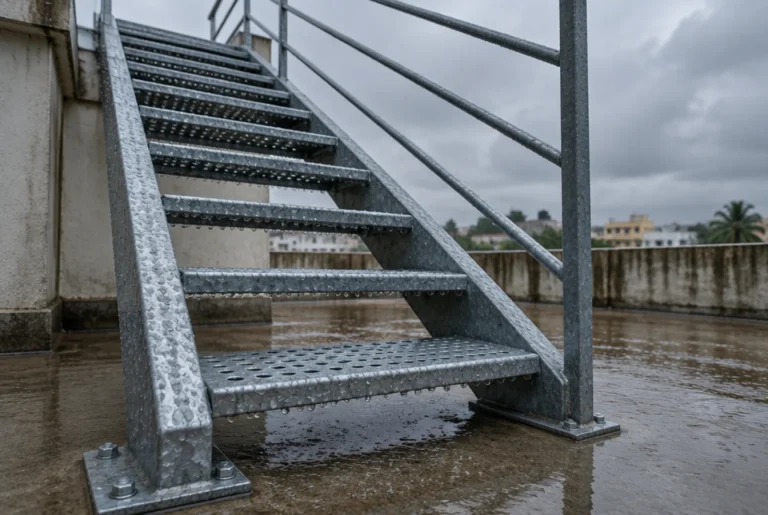
- Weather-resistant (galvanized/powder-coated)
- Ideal for: Rooftops, gardens, duplexes
Why Choose Stairs Xpert by Dodia?
- Made to your dimensions — every staircase is built to the measurements of your building.
- Mild steel and stainless steel fabrication, with timber, glass and stone treads.
- Shop drawings included in the quotation, with no separate design fee.
- Fabrication and installation by our own team, across India.
Conclusion
A spiral staircase is more than just a passage between floors—it’s a statement piece that elevates your space. Whether you need a space-saving solution or a luxury design, Stairs Xpert by Dodia delivers quality, craftsmanship, and innovation.
Every staircase here was drawn, cut, welded and installed by our own team. See the work we have delivered, or read about building a staircase to your own dimensions. When you are ready, send us your measurements.
If you have settled on a spiral, our spiral staircases covers the types, materials and diameters we build, and how an order runs.
More guides from our workshop
- Staircase materials in India — steel, aluminium, glass, timber and stone compared for coastal and monsoon conditions.
- Ready-made staircases — what can be built to a standard pattern, and what has to be made to your measurements.
- Repair or replace an old staircase — which faults are fixable and which are not.
- Is a spiral staircase safe for your home? — the measurements that decide it.
- Aluminium stairs and railings — where aluminium wins and where steel is the better answer.
- Choosing a staircase manufacturer — what to check before you commit.