How to Choose a Staircase Manufacturer in India
Most people commission exactly one staircase in their lifetime, which makes comparing suppliers unusually hard. The quotes look similar, the photographs all look good, and the differences that matter only become visible after the work starts.
Here is what to actually check, in the order it matters. None of it requires technical knowledge.
Do they fabricate, or do they subcontract?
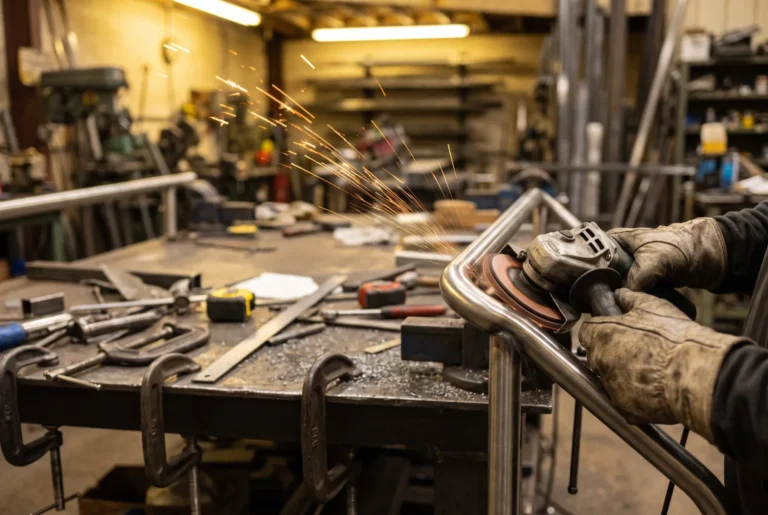
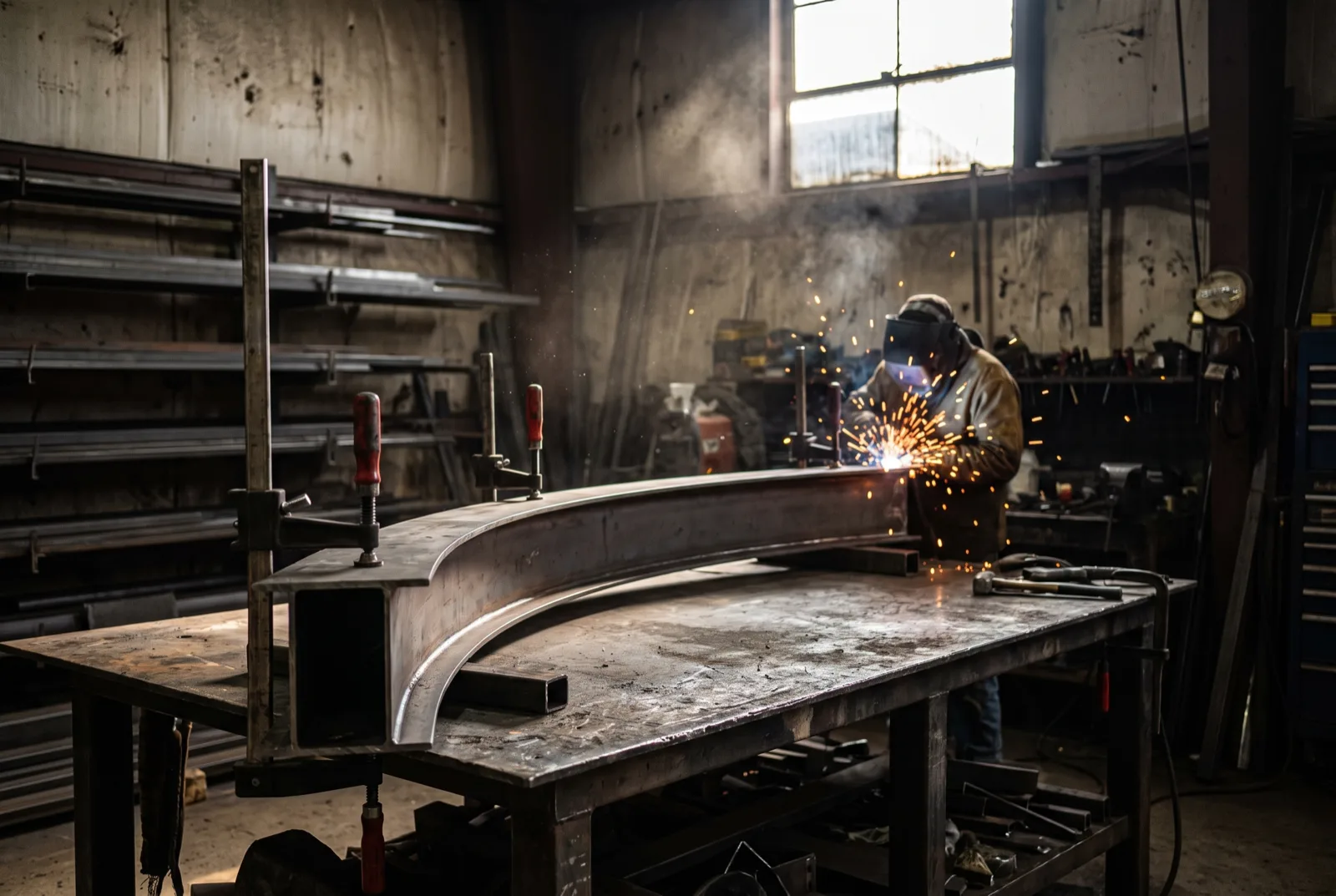
This is the single most useful question, and it is rarely on anyone else’s list. A firm that designs, fabricates and installs with its own team carries the whole problem. A firm that subcontracts fabrication has someone to blame when a weld is wrong, and you are the one standing between two companies.
Ask directly: who cuts and welds this, and who installs it? If both answers are the same organisation, corrections are simply corrections. If they are not, ask who you call when something is out by five millimetres.
Will you see a drawing before anything is cut?
A staircase cannot be adjusted after fabrication in any meaningful way. Steel that has been cut and welded to the wrong rise is scrap, not a starting point.
A serious supplier produces a drawing showing rise, going, headroom and handrail height, and waits for your approval. If someone is ready to start building from a phone conversation and a rough measurement, that is not speed, it is risk they are passing to you.
Is the quote actually complete?
This is where apparently cheaper quotes stop being cheaper. Ask whether the figure includes:
- Fabrication and all materials.
- The finish, whether that is powder coating, galvanising, anodising or polish.
- Transport to your site.
- Installation labour.
- Removal and disposal of an existing staircase, if there is one.
- Any site work needed to fix the staircase to the structure.
A quote that covers fabrication only can grow considerably by the time the staircase is standing. Get every line in writing before comparing two numbers, because two numbers that cover different things cannot be compared at all.
Can they tell you what they would not do?
A supplier who agrees to everything is telling you something. Some spaces are wrong for a spiral. Some spans should not be cantilevered. Aluminium is the wrong material for certain structural work.
A fabricator who says we would not recommend that here, and this is why is more useful than one who says yes to every idea and lets you discover the problem after installation. Ask what they would change about your plan. The answer tells you how much engineering sits behind the quote.
Do they build to specific dimensions, or to vague assurances?
Safety on a staircase is a set of numbers, not a sentiment. Handrail height between 34 and 38 inches. Baluster gaps a child cannot pass through. Consistent rise on every step in the flight. Adequate headroom where you rotate on a spiral.
If a supplier talks about safety without ever mentioning a measurement, they may still build a safe staircase, but you have no way of knowing in advance. Our own approach to this is set out in how we work.
Questions worth asking before you commit
- Who fabricates this, and who installs it?
- Will I see and approve a drawing before you cut anything?
- What exactly does this quote include, and what would be extra?
- What is the lead time from drawing approval, not from today?
- What handrail height and baluster spacing will you build to?
- Have you done this pattern before, and can I see it?
- What happens if something needs correcting after installation?
Red flags
- A firm price without your measurements. Floor-to-floor height decides the staircase. A number given before that is a guess dressed as a quote.
- No drawing stage. Nothing to approve means nothing to hold anyone to.
- A timeline with no conditions. Fabrication starts when the drawing is signed off, so any honest timeline references that, not the day you called.
- Reluctance to name materials by grade. Stainless steel is a family, not a specification.
If you are outside the supplier’s city
Distance is a normal part of this trade rather than an obstacle, provided the supplier has a process for it. Ask how measurements are taken remotely, how components travel, and who installs at the far end. Our own process is set out in staircase delivery across India.
If you want to see how we answer these questions ourselves, start with custom staircase solutions or ready-made staircases, or send your measurements and judge the reply against the list above.
Once the staircase is in, keeping it that way is straightforward. Our staircase maintenance guide sets out the routine checks by material, and a seasonal schedule built around the monsoon.