Galvanised or Powder Coated: Finishing an Outdoor Staircase
An outdoor steel staircase fails at its finish long before it fails as a structure. The welds hold, the sections stay straight, and what goes wrong is a coating that let water reach the steel underneath. So the finish is not a cosmetic decision on a terrace staircase. It is the decision.
Two finishes do most of this work in India, and they protect in completely different ways.
Galvanising protects even when it is damaged
Hot dip galvanising means dipping the fabricated steel into molten zinc. The zinc bonds to the steel and forms a layer that is part of the surface rather than a film sitting on top of it.
The important part is what happens when that layer gets scratched. Zinc corrodes in preference to steel, so a scratch that exposes bare metal is still protected by the zinc around it. A deep scrape on a galvanised stringer is not an emergency.
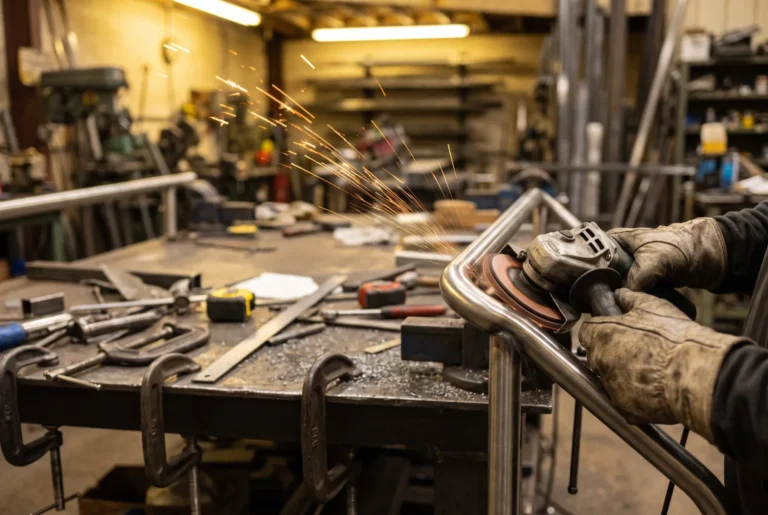
It has to happen after fabrication, not before. Welding galvanised sections burns the zinc off exactly where the joint needs it most, which is why the whole assembly goes into the bath once the welding is done, and why drilling or cutting on site should be avoided.
Powder coating protects only while it is intact
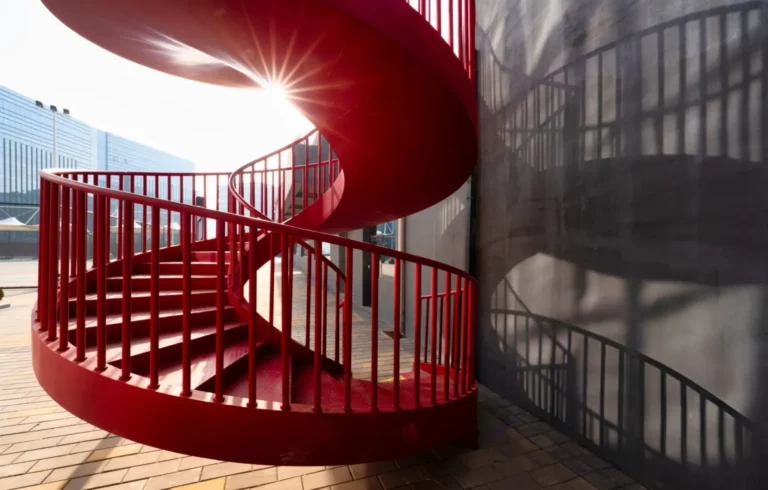
Powder coating is a polyester powder sprayed onto the steel and baked until it flows into a hard, even skin. It gives you colour, an even surface and a finish that looks deliberate rather than industrial.
It is a barrier, and a barrier works until it is breached. Chip a powder coated railing down to the steel on an exposed terrace and water sits in that chip. Rust then spreads underneath the coating, lifting it from below, which is why the damage you can see is usually smaller than the damage that is there.
On an internal flight that is a minor issue. Through a Mumbai monsoon on an open terrace it is the whole story.
Using both
The two are not alternatives. Galvanising first and powder coating over it gives you the zinc underneath and the colour on top, so a chip in the coating meets a protected surface instead of bare steel.
It costs more than either finish on its own and it is the specification we would argue for on any staircase that is genuinely exposed, particularly near the coast where the air carries salt.
Where water actually collects
No finish survives standing water, so the detailing matters as much as the coating:
- Hollow sections need drain holes. A sealed tube that takes in water through one gap and cannot let it out rusts from the inside, invisibly.
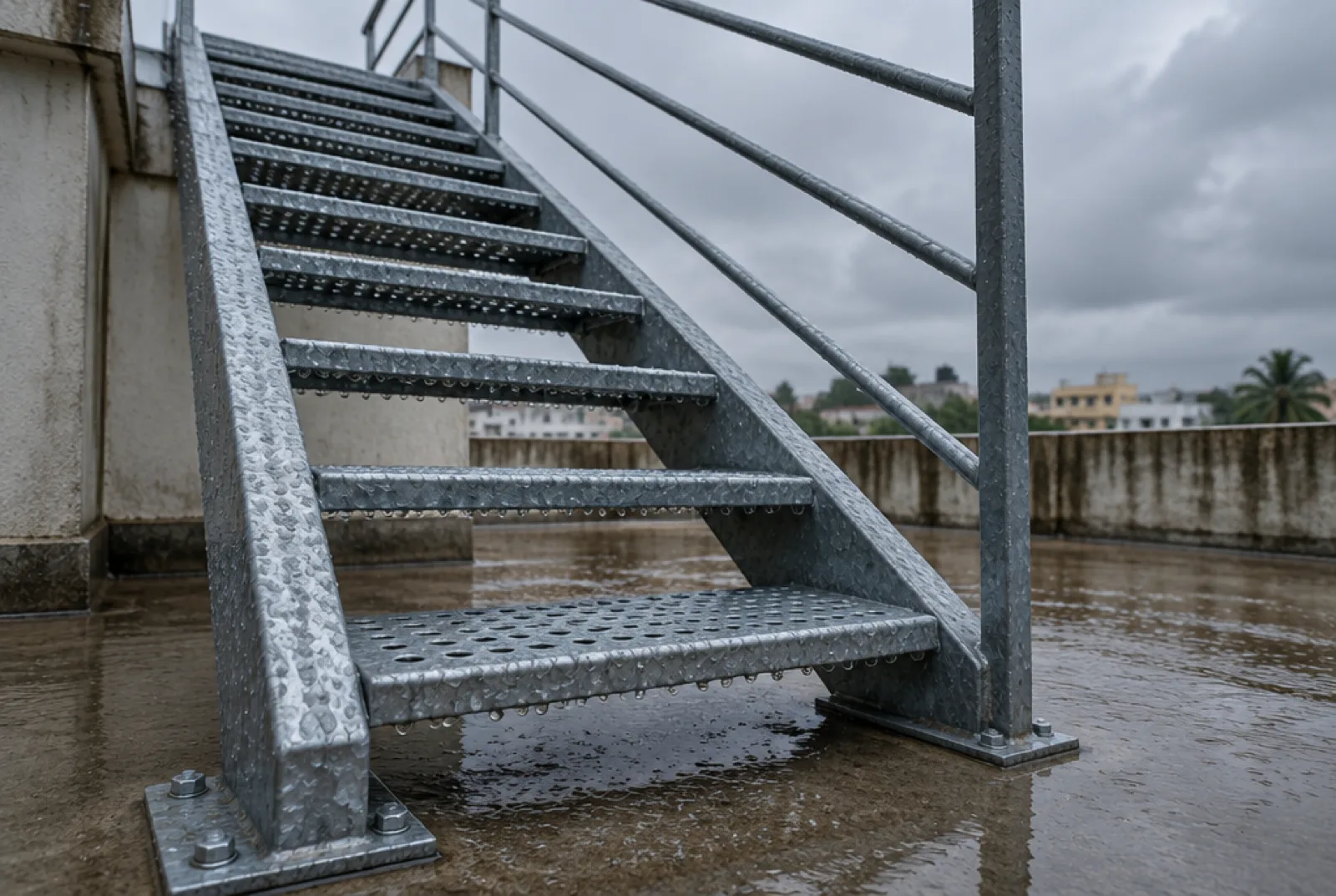
- Treads should shed water. Perforated or chequered treads drain and give grip when wet. A flat plate holds a puddle.
- Base plates sit in the worst spot. Where the staircase meets the terrace slab is where water pools, and it is the first place to inspect.
- Fixings should match. Stainless bolts into a galvanised frame avoid a rust streak starting at every fixing point.
What to expect afterwards
A galvanised staircase dulls from bright grey to a flat matte grey in its first year. That is the zinc weathering normally, and it is not a defect.
A powder coated one wants a look over before and after the monsoon, with attention to the base plates, the underside of treads and anywhere a ladder or a pot has knocked it. Catching a chip early is a touch up; leaving it is a recoat.
We build and finish terrace and external staircases in our Malad workshop and install them across India. For the upkeep side, see chips, fading and when to recoat and our staircase maintenance guide.