Why a Spiral Staircase Ticks or Creaks: Thermal Movement Explained
If your spiral staircase makes a faint tick or a single sharp creak at the same time every day, usually late morning or early evening, it is almost certainly not a fault. It is the steel changing size.
Steel moves, and the amount is predictable
Steel expands roughly 12 micrometres per metre for every degree Celsius. That sounds like nothing, and per degree it is. Across a real day in an Indian home it adds up.
Take a three metre centre column and a temperature swing of 25 degrees between a cool night and a hot afternoon, which is ordinary in most of the country. The column grows about 0.9 millimetres and then shrinks back. Aluminium moves about twice as much again. Nothing in the staircase is broken; a metre of metal is simply a slightly different length than it was at breakfast.
Why you hear it
Movement itself is silent. The noise comes from two surfaces that are gripping each other, holding, then letting go all at once. On a spiral staircase that usually happens in one of three places.
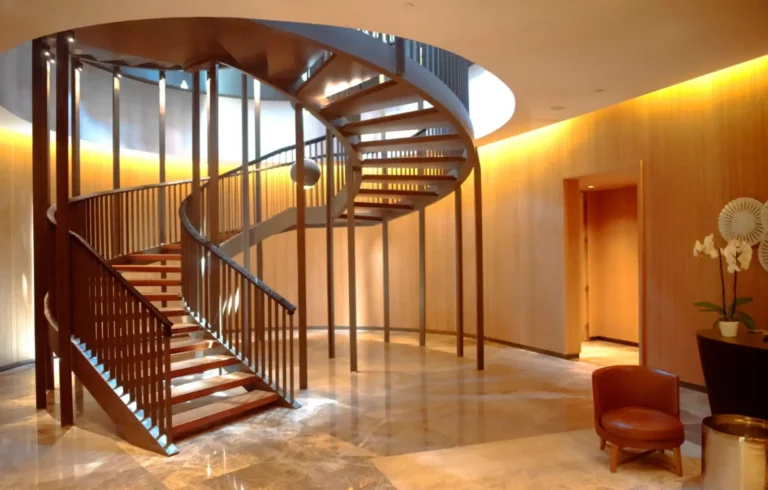
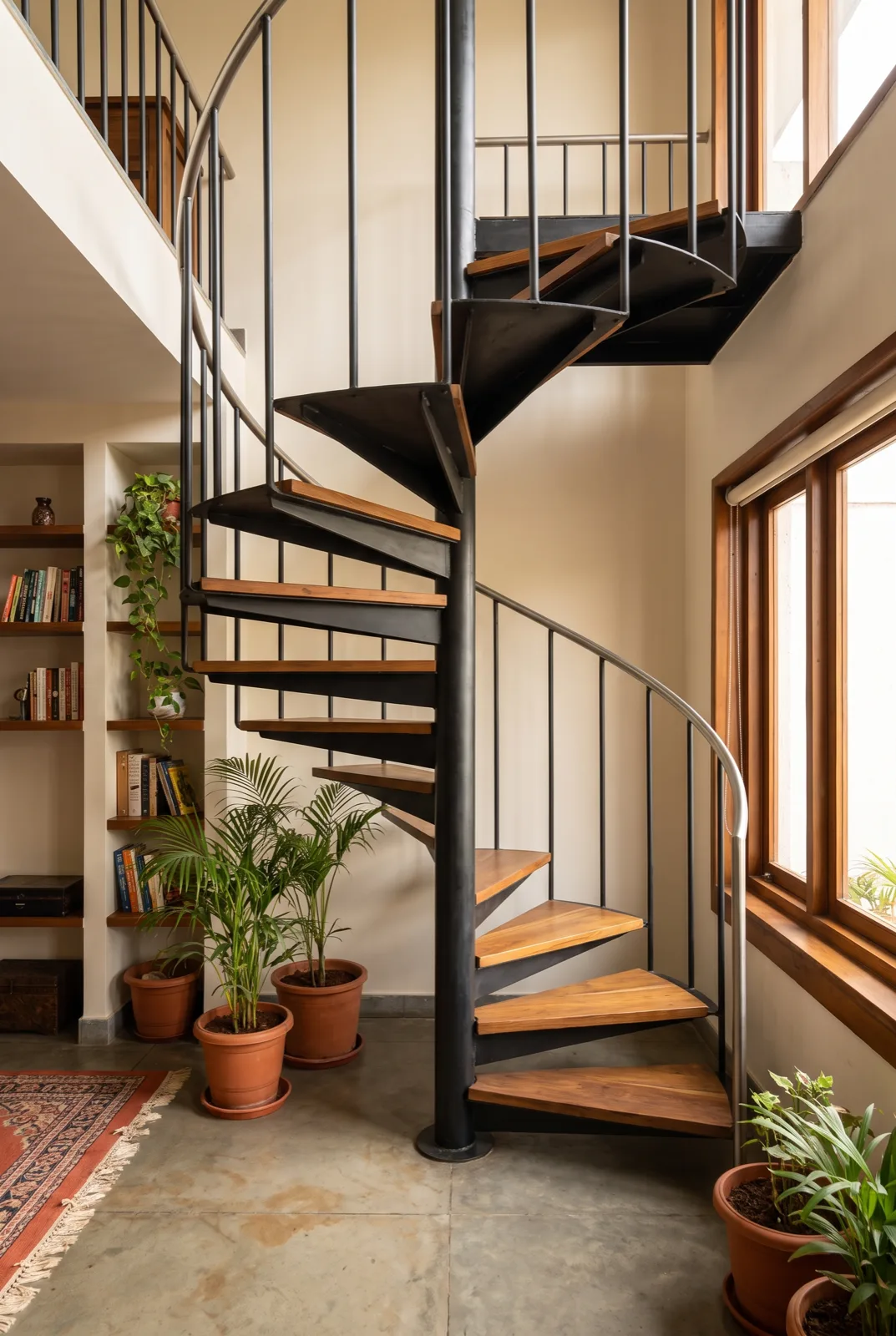
- Where each tread meets the centre column. A stack of treads on a column has many closely fitted joints, and each one can stick and release.
- At the top landing fixing. This end is bolted to the building, which is not expanding at the same rate as the staircase.
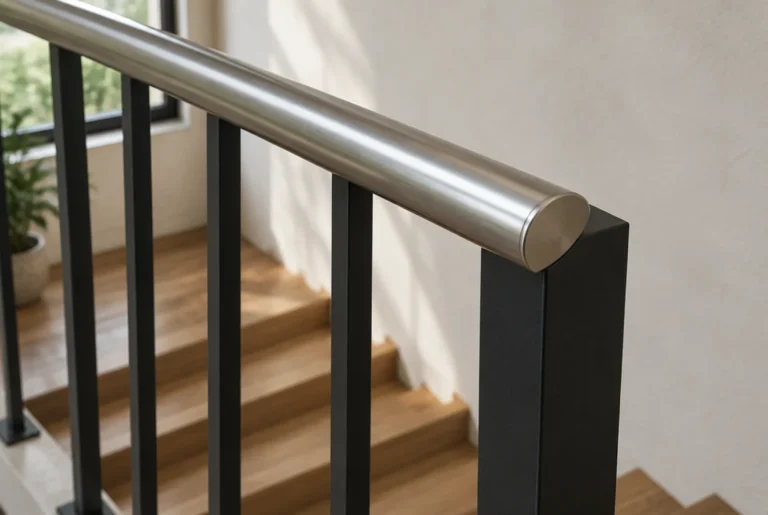
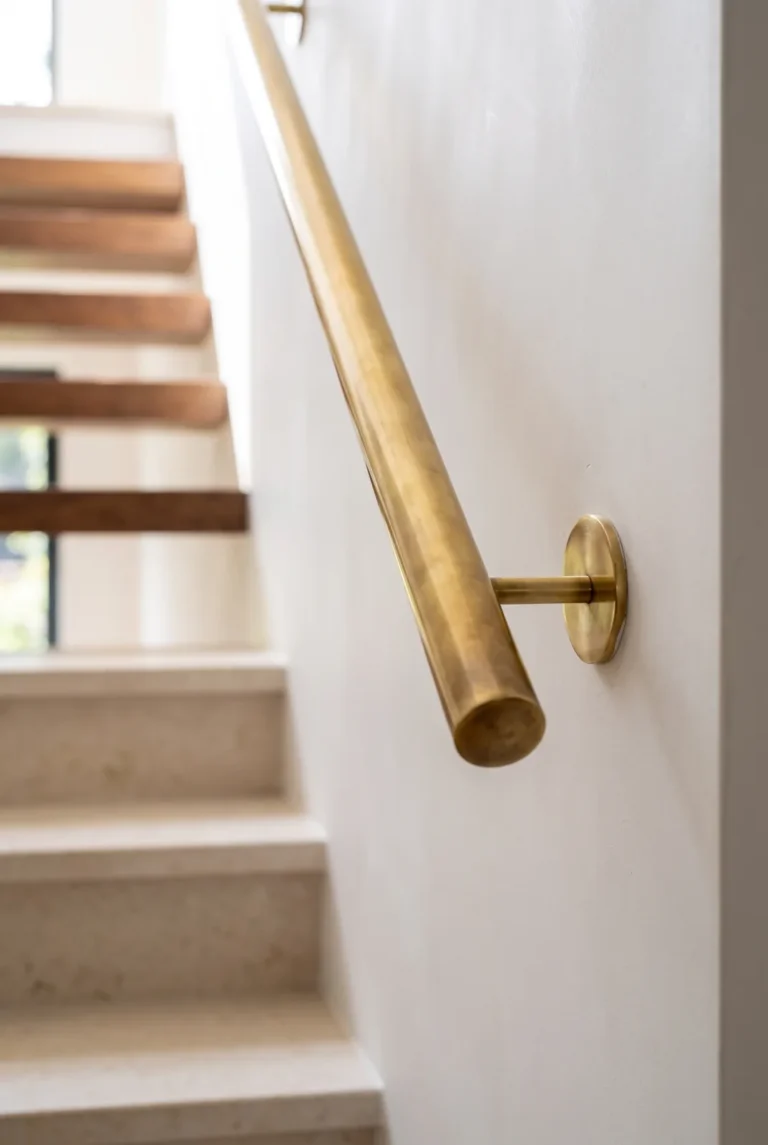
- Along the handrail. A continuous handrail is a long, thin piece of metal, so it moves more than anything else in the assembly.
The sound is sharp because the release is sudden. That is why it reads as a crack rather than a groan, and why it can be loud enough to be alarming in a quiet house.
Normal, or something to look at
The difference is usually easy to judge without tools.
Probably normal
- A tick or creak that follows the time of day and the weather.
- Noise that appears in the first summer after installation and then settles.
- A sound with no movement you can see or feel underfoot.
- More noise on an external or terrace staircase, which sees far bigger temperature swings than an indoor one.
Worth inspecting
- Any visible gap that keeps growing week after week rather than opening and closing.
- Movement you can feel through a tread or the handrail when you put weight on it.
- A fixing plate that has lifted, or bolts that will not stay tight however often you tighten them.
- Cracked paint or a fine line in the coating at a weld, which can mean the joint is carrying stress it was not meant to carry.
- Any rocking or sway in the centre column itself.
The last two are the ones to take seriously. Thermal movement is designed for; a column that moves under load is not.
What can be done about the noise
Thermal movement cannot be removed, because the metal will change size whatever anyone does. It can be allowed for, and most of that happens before the staircase is built.
- Fixings that let the staircase slide slightly rather than clamping it rigidly at both ends.
- A small designed gap where the flight meets the upper floor, rather than a tight fit that has nowhere to go.
- Isolating washers or a thin non-metallic layer at the noisiest joints, so metal is not gripping bare metal.
- Nylon or fibre washers at tread-to-column joints, which stop the stick-and-release cycle that makes the sound.
On an existing staircase, the honest order is: find which joint is making the noise, check whether it is tight, and only then treat it. Tightening every bolt on the staircase is the common first instinct and it often makes the noise worse, because a joint clamped harder has more grip to release.
When it is worth a professional look
If the noise came with visible movement, a gap that keeps widening, or a mark in the coating at a weld, have it inspected rather than tightened. We work on staircases we did not build, so describe what you are seeing and send a photograph of the joint.
For routine care, our spiral staircase maintenance guide covers cleaning and checks by material. If the staircase is noisy because it was never engineered properly, that is a different conversation and it starts at custom staircase solutions.