Brass Handrail Care: Patina, Polish and What Ruins It
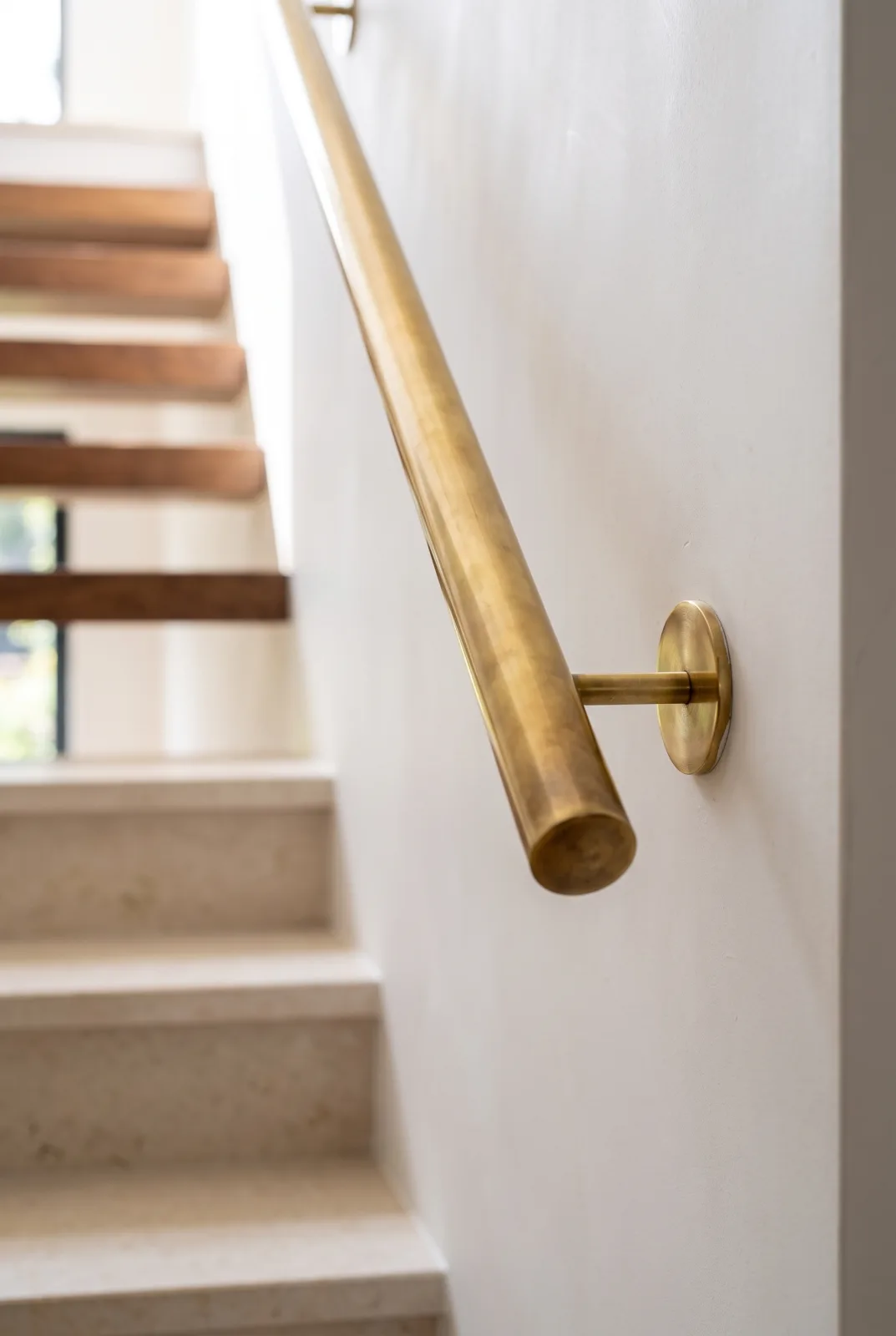
Brass is the one handrail material that keeps changing after it is installed. Left alone it darkens to a warm, deep brown; kept polished it stays bright gold. Neither is wrong, but a brass handrail only looks good when it is clearly one or the other, and most of the brass handrails that look tired are stuck somewhere in between.
Why brass changes colour
Brass is an alloy of copper and zinc, and the copper reacts slowly with the air. Hands speed that up, because skin leaves oil and salt on the surface every time the rail is held.
The result is uneven. The stretch of rail people grip is rubbed bright by use, while the ends and the underside darken. That two-tone look is the most common complaint about brass handrails, and it is a care decision rather than a fault.
Decide first: patina or shine
- Living finish. Unlacquered brass left to age. It darkens gradually into a soft patina, the rail you touch stays a little brighter, and the only care it needs is cleaning. This is the lower-effort choice over the long term.
- Lacquered finish. A clear coat seals the brass and holds the shine. It needs little attention at first, but hands eventually wear the lacquer through where the rail is gripped, and those patches then tarnish while the rest stays bright. Restoring it means stripping and relacquering the whole rail.
- Polished bright. Unlacquered brass polished on a regular schedule. It looks the sharpest and takes the most work.
The mistake is mixing them: polishing a patinated rail now and then, or polishing a lacquered rail, which strips the lacquer in patches.
Routine cleaning
- Wipe with a soft, dry cloth to remove dust and the day-to-day film from hands.
- For grime, use a cloth dampened with warm water and a little mild detergent, then wipe with clean water.
- Dry it straight away. Water left on brass leaves marks and speeds tarnish, particularly around the brackets.
- Keep water off the timber or stone the rail runs over while you work.
Polishing, if you want the shine
- Use a polish made for brass, not a general metal or silver polish.
- Work along the length of the rail in sections, then buff with a clean dry cloth.
- Polish the whole rail in one go. Stopping halfway leaves exactly the patchy finish you were trying to remove.
- Mask the wall and the brackets. Dried polish residue in a crevice turns dark and green and is hard to clean out.
What damages brass
- Abrasive pads and scouring powders. They scratch the surface and take off lacquer.
- Ammonia and bleach cleaners. They discolour brass and attack lacquer.
- Home remedies left on too long. Lemon juice and vinegar do lift tarnish, but they are acids, and left in contact they etch the metal. Rinse them off completely and dry the rail.
- Polishing a lacquered rail. It removes the lacquer unevenly and ruins the finish.
Brass in humid and coastal homes
Humidity and salt air make brass tarnish faster, so a brass handrail near the sea will darken sooner than one inland. Watch for small green spots, called verdigris, forming in joints and around brackets. They mean corrosion has started in a crevice and should be cleaned out before they spread.
Check the brackets too
Brass is a soft metal, and the fixings holding a brass rail can work loose over time. Twice a year, push the rail firmly at several points and look at each bracket. Any movement is far easier to correct early. Our staircase maintenance guide covers balustrade and handrail checks for every material, and if you are comparing metals, cleaning a stainless steel railing covers the lower-maintenance alternative. For handrail and railing systems, see railings and balustrades.