Powder Coated Railings: Chips, Fading and When to Recoat
On a mild steel railing or staircase, the powder coat is not decoration. It is the only thing standing between the steel and the air, which means a chip that reaches bare metal is a breach in the protection, not just a mark on the finish.
Here is how to tell which damage matters, how to deal with it, and when a touch-up stops being enough.
What powder coat is
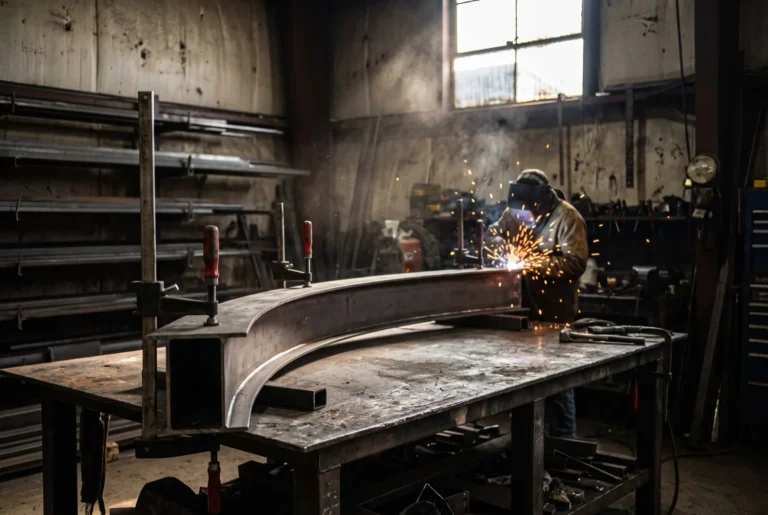
Powder coating is a dry powder applied to the steel and then baked on in an oven in the workshop. It gives a thicker, tougher and more even finish than paint, which is why it is the standard for indoor railings and staircases.
The catch is that it cannot be reapplied on site the way it was originally done, because it needs the oven. Repairs at home are touch-ups with matching paint. A full renewal means stripping and recoating in a workshop.
Three kinds of damage, and which one matters
- Chips and deep scratches through to bare steel. The one to deal with promptly. Rust starts at the exposed edge and can creep underneath the surrounding coat, lifting it from below.
- Scuffs that do not reach the metal. Cosmetic. The protection is still intact.
- Fading and chalking. Outdoors, sunlight gradually breaks down the surface, leaving it dull and slightly powdery to the touch. Cosmetic at first, but over years it thins the coat.
Touching up a chip
- Make sure the area is completely dry.
- Clean and degrease it so the touch-up paint can bond.
- Remove any loose flakes of coating around the chip until the edge is firmly attached.
- Lightly roughen the bare spot and the edge of the surrounding coat with fine abrasive paper.
- If there is any rust, treat it with a rust converter or metal primer first.
- Apply a matching touch-up paint in thin coats, letting each one dry, rather than one thick dab.
For a close colour match, ask for the colour code the railing was coated in. Powder colours are usually specified by a standard code, and matching paints are made to the same codes.
Touch-up or full recoat
Touch-ups are right for a few isolated chips. A full recoat is the better answer when:
- chips are widespread rather than occasional,
- the coat is bubbling or lifting, which means rust has spread underneath,
- the surface is heavily chalked and faded all over.
A recoat usually means taking the railing down so it can be stripped, cleaned back to bare steel and powder coated again in a workshop. It is more work than a touch-up, but it restores the protection properly rather than patching over a problem.
Bubbles mean rust underneath
If the coat has blistered or lifts when pressed, do not paint over it. The rust is under the coat, and a layer of paint on top traps it. Open it up, remove the loose coating and the rust, and treat the steel before refinishing. Our guide to rust at the base of balusters covers where rust starts on railings and how to treat it.
Outdoors, galvanise first
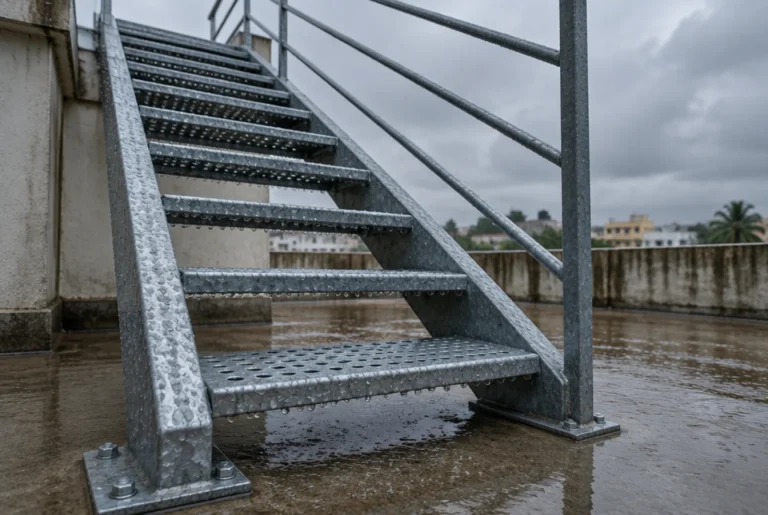
Powder coat alone on exposed steel depends entirely on staying unbroken. Galvanising the steel before powder coating changes that: the zinc underneath protects the steel even where the coat is chipped. For terraces, balconies and anywhere exposed, it is the finish to specify. Terrace and external staircases explains the options.
Routine care
- Wash with warm water and mild detergent, then dry.
- Avoid solvents and abrasive pads, which dull and thin the coat.
- Walk the railing before the monsoon and deal with any chip that reaches bare metal.
For care across the rest of the staircase, see our staircase maintenance guide. For the mild steel railings and staircases we fabricate and finish, see MS railings and staircases.