Is a Spiral Staircase Safe for an Indian Home?
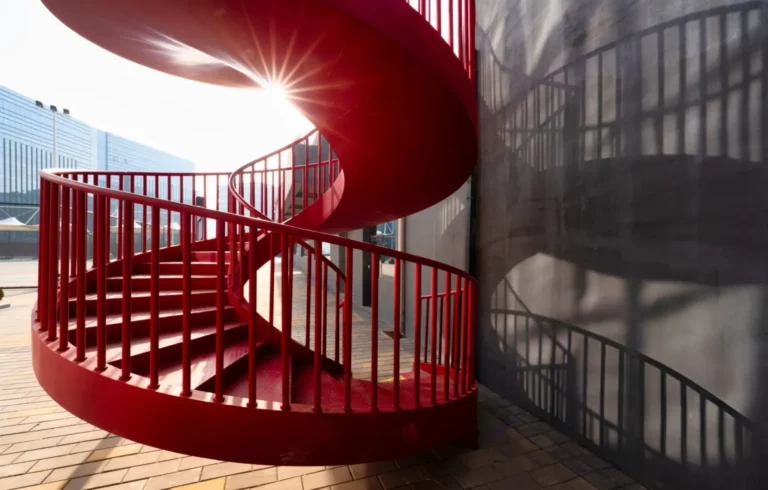
Spiral staircases have a reputation for being risky. Most of that reputation comes from badly proportioned ones, not from the shape itself. A spiral built to the right geometry is safe for daily use in a home. A spiral squeezed into an opening that was always too small is not, and no amount of good fabrication fixes it afterwards.
Here is what actually decides which one you end up with.
The tread is not the same width all the way across
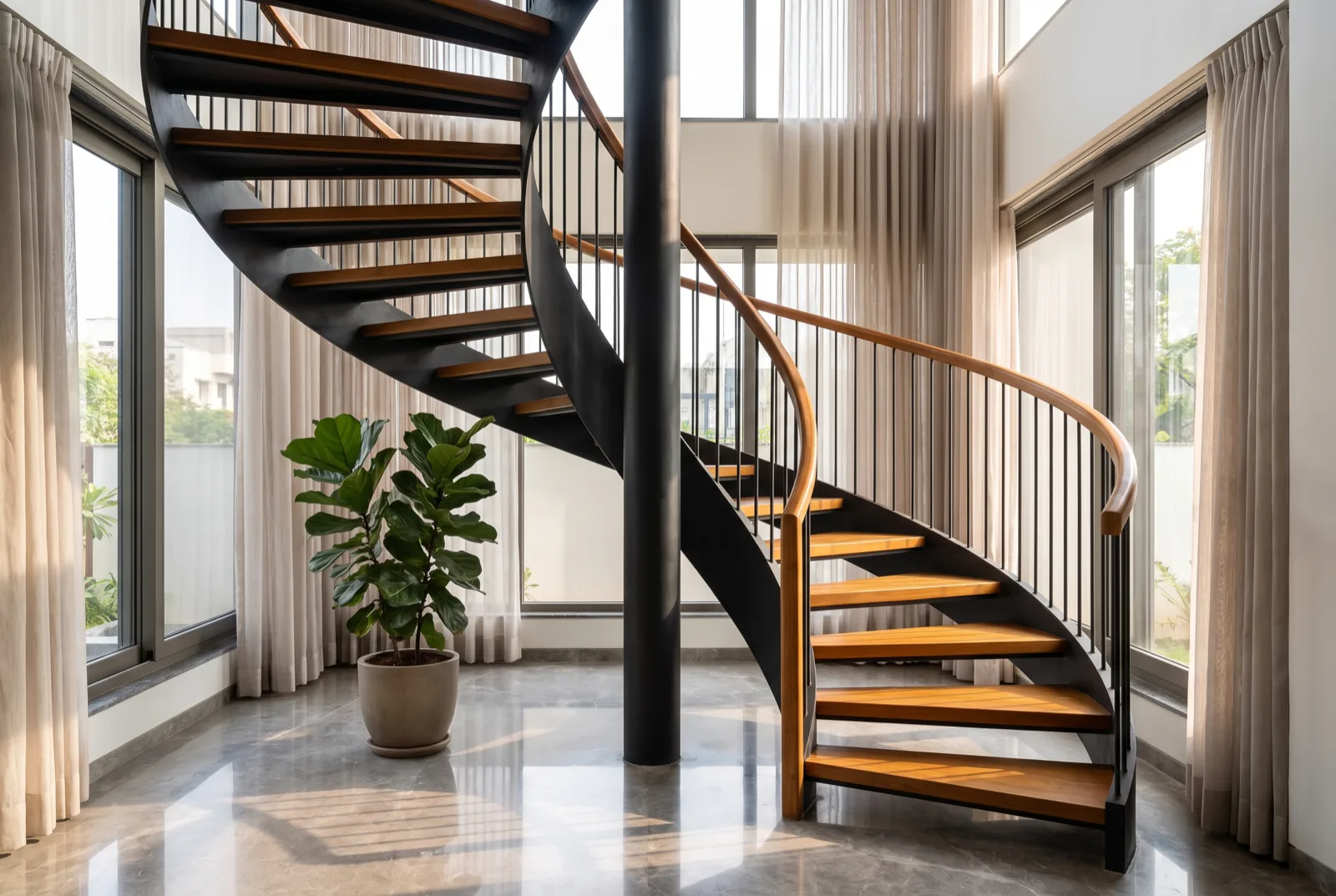
This is the single fact that explains almost every complaint about spiral staircases. Each tread is a wedge. Near the centre column it is very narrow, and at the outer edge it is at its widest.
People do not walk in the middle of a wedge. They walk where there is room, which is the outer third, and that is where the tread has to be deep enough to take a whole foot. A spiral feels unsafe when the usable part of the tread is too shallow, which is why diameter matters so much more than it looks like it should. Choosing a smaller diameter to save floor space takes the depth out of exactly the part of the step people use.
The measurements that decide safety
- Overall diameter. Everything else follows from it. Too small, and no arrangement of treads will give a comfortable walking line.
- The rise of each step. Every step in a flight should be the same height. Consistency matters more than the exact figure, because people climb stairs by rhythm and a single odd step is what trips them.
- Depth at the walking line. Measured where people actually put their feet, not at the widest point of the wedge.
- Headroom. On a spiral you rotate as you climb, so the point where your head passes the floor above is the one to check. This is the measurement most often missed on a staircase that was fitted rather than designed.
- Handrail height between 34 and 38 inches, continuous, and graspable all the way round.
- Baluster spacing tight enough that a small child cannot pass through the gap.
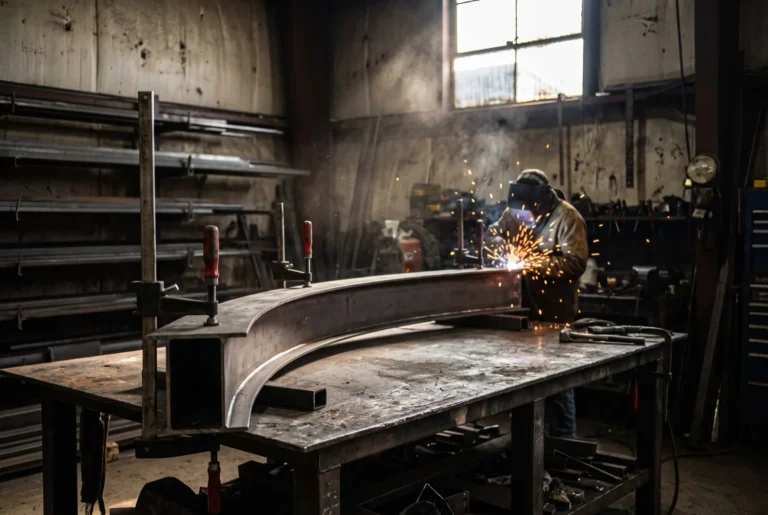
We build to these on every staircase, and they are the reason a drawing is produced and approved before anything is cut. A staircase that fails on headroom or walking-line depth cannot be corrected once it is welded.
Homes with small children
A spiral can be safe with young children in the house, but two details do the work.
- Baluster gaps sized so a child cannot get through or get a head stuck. This applies to the gap under the handrail at the top landing as well, which is often left open.
- Somewhere to fit a gate at the top, the bottom, or both. This is far easier to allow for at the design stage than to retrofit onto a curved balustrade.
Open risers are the other question that comes up. They look better and let light through, and they are also the thing most likely to worry a parent. If that matters to you, say so before the drawing is approved rather than after.
When a spiral is the wrong choice
Worth saying plainly, since we would rather build the right staircase than the one that was asked for.
- As the only staircase for someone with limited mobility. Continuous turning and a varying tread is harder work than a straight flight, every single trip.
- Where large furniture has to move between floors. A sofa does not go up a spiral. If the upper floor has no other route, this decides the matter on its own.
- Where the available diameter is simply too small for a comfortable walking line. A tighter spiral is not a compromise, it is a staircase people will avoid using.
Spirals are at their best for terrace and mezzanine access, as a second staircase, and in spaces where a straight flight would eat a room. That is not a limitation so much as what the shape is for.
Checking a staircase you already have
If a spiral in your home feels unsafe, the cause is usually one of a short list.
- Steps that are not all the same height, so the rhythm breaks.
- Not enough depth where people actually walk.
- A handrail that stops short, changes height, or is too thick to grip properly.
- Baluster gaps that were never checked against a child.
- Movement in the centre column, which is a structural matter and not a comfort one.
The first four are frequently fixable. The last is not a maintenance job. If the column moves under load, stop using the staircase and have it looked at.
For upkeep rather than geometry, see our maintenance guide. If you are planning one, custom staircase solutions covers how the drawing stage works, and send your floor-to-floor height and opening size if you want to know whether a spiral fits your space before you commit to one.
For the spirals we fabricate and install, including outdoor and compact designs, see spiral staircases.