Cable Railing Maintenance: Tension, Fittings and Cleaning
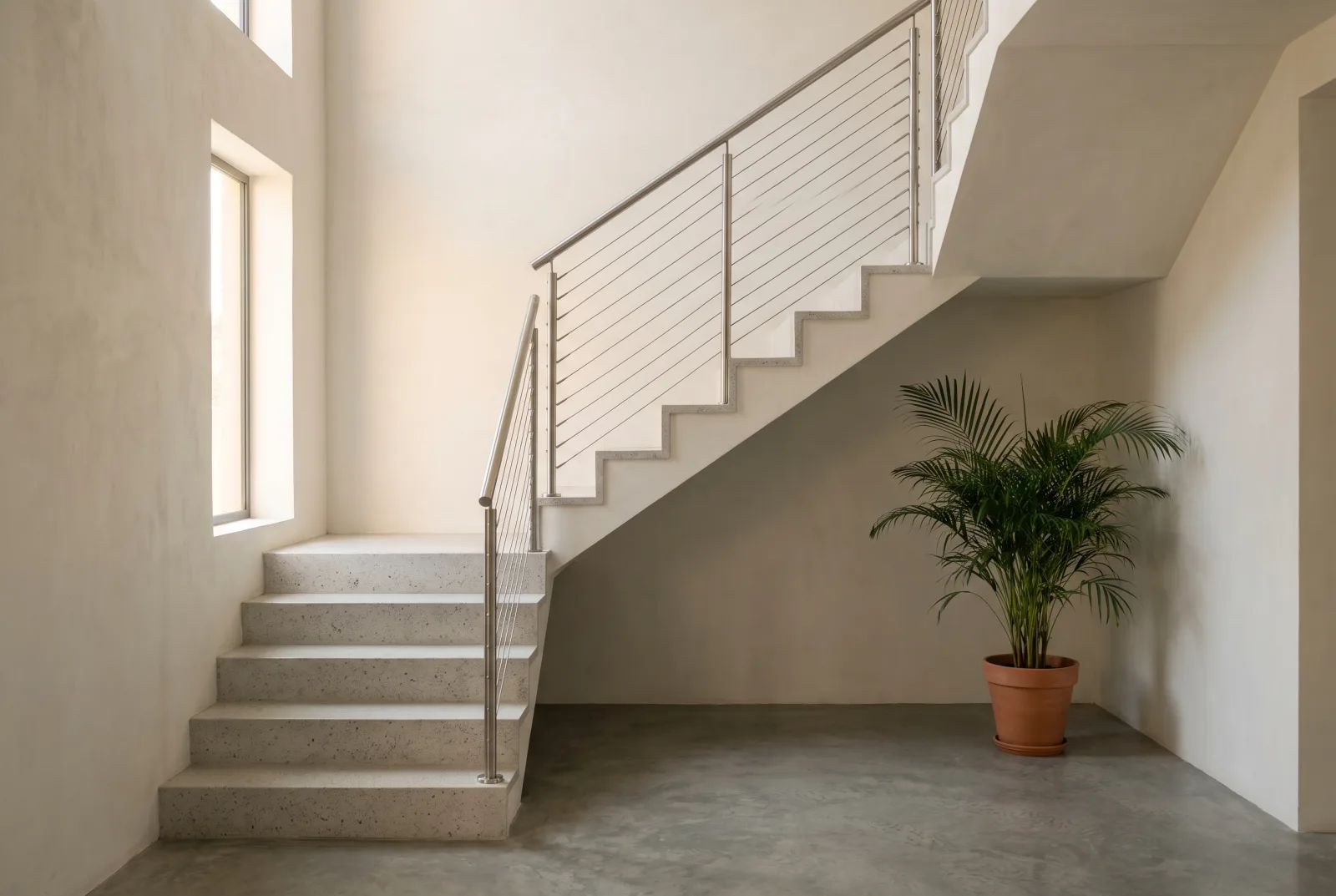
A cable railing keeps a staircase, balcony or terrace open to the view, and it does that with nothing more than thin stainless cables pulled taut between posts. That tension is the whole design. A cable that has gone slack is no longer a barrier, which is why a cable railing needs a different kind of attention from a solid one.
Why cables lose tension
Some loss of tension is normal and expected, particularly in the first months after installation.
- New cables and fittings settle and stretch slightly once they are loaded.
- Temperature changes make the cables and posts expand and contract through the year.
- People lean on railings, and repeated pressure gradually works the tension out.
A check and re-tension a few months after installation is part of a cable railing, not a sign that something is wrong.
How to check the tension
Press firmly on each cable halfway between two posts. A cable that moves far enough for a hand, or a small child, to push through the gap is due for tightening. Check the middle of the longest spans first, since that is where cables sag most.
Look at the gap between cables as well as the cables themselves. The spacing that is safe with the cables taut can open up considerably when one is slack.
How cables are re-tensioned
Each cable has a tensioner or turnbuckle at one end. Tightening is done a little at a time, moving between cables rather than taking one all the way, so the load on the end posts stays balanced and they are not pulled out of line.
If an end post has started to lean towards the cables, stop there. That means the post or its fixing is carrying more than it should, and it needs a fabricator rather than more tension.
Cleaning the cables
- Wipe the cables and fittings with warm water and a little mild detergent on a soft cloth, then dry them.
- Near the coast, rinse with fresh water from time to time. Salt does not wash itself off.
- Never use steel wool or a wire brush. Fragments left on stainless steel rust and stain it.
- Avoid bleach and chloride-based cleaners, which attack stainless steel.
We use 316-grade cable, the grade that resists coastal air. Cleaning a stainless steel railing explains why grade matters and what causes brown staining.
Inspect the fittings
- Check the end fittings where cable meets post for cracks or movement.
- Look for rust staining at fittings. On stainless it usually means a lower grade part or water trapped in a crevice.
- Make sure tensioners are not wound almost to the end of their thread, which leaves no room for future adjustment.
Cable railings and small children
It is worth being straightforward about this. Horizontal cables can be climbed like the rungs of a ladder. On a staircase that is rarely a concern, but on a balcony or terrace in a home with young children it matters. Vertical balusters or glass infill avoid it entirely, and our page on balcony railings covers the options.
When to call a fabricator
- An end post leaning or moving under load.
- A cable with broken or frayed strands.
- Rust bleeding from a fitting.
- A cable that will not hold its tension for long after tightening.
For handrail and balustrade checks on the rest of the staircase, see our staircase maintenance guide. For the cable and stainless railing systems we build, see railings and balustrades and SS railings.